Table of ContentsMore About How Does A Timeshare WorkHow Does Wyndham Timeshare Work Can Be Fun For AnyoneSome Known Details About How Much Is My Timeshare Worth The Only Guide to How To Donate A Timeshare
Residential or commercial property with a particular kind of ownership or use rights Barnsdale Hall Hotel (UK) timeshare lodges. On the premises of the Finest Western Hotel are a variety of wood A-frame chalets. A timeshare (in some cases called vacation ownership) is a property with a divided type of ownership or usage rights. These homes are typically resort condo systems, in which multiple parties hold rights to utilize the property, and each owner of the same lodging is allotted their amount of time.
The ownership of timeshare programs is differed, and has been changing over the years. The term "timeshare" was created in the United Kingdom in the early 1960s, broadening on a vacation system Website link that became popular after World War II. Villa sharing, also referred to as vacation home sharing, included 4 European families http://remingtoniftz692.huicopper.com/how-how-do-timeshare-exchanges-work-can-save-you-time-stress-and-money that would purchase a holiday cottage jointly, each having exclusive usage of the residential or commercial property for among the four seasons.
This idea was mainly used by associated households since joint ownership needs trust and no property manager was included. Nevertheless, couple of households holiday for a whole season at a time; so the getaway home sharing residential or commercial properties were typically vacant for extended periods. Enterprising minds in England chose to go one action even more and divide a resort space into 1/50th ownership, have two weeks each year for repair work and upgrades, and charge an upkeep charge to each owner.
The first timeshare in the United States was started in 1974 by Caribbean International Corporation (CIC), based in Fort Lauderdale, Florida. It used what it called a 25-year holiday license rather than ownership. The business owned two other resorts the trip license holder might alternate their trip weeks with: one in St.
Not known Factual Statements About How To Get Out Of A Hilton Grand Vacation Timeshare
Thomas; both in the U.S. Virgin Islands. The Virgin Islands homes started their timeshare sales in 1973. The contract was simple and uncomplicated: The business, CIC, guaranteed to keep and offer the defined lodging type (a studio, one bedroom, or 2 bed room unit) for usage by the "license owner" for a period of 25 years (from 1974 to 1999, for example) in the specified season and number of weeks agreed upon, with only two additional charges: a $15.00 per diem (per night) rate, frozen at that cost for the life of the contract.
The contract was based on the fact that the cost of the license, and the small per diem, compared with the predicted increase in the expense of hotel rates over 25 years to over $100.00 per night, would save the license owner many vacation dollars over the span of the license contract.
The license owner was allowed to lease, or offer their week away as a present in any particular year. The only stipulation was that the $15.00 daily should be paid every year whether the system was inhabited or not. This "must be paid annual cost" would end up being the roots of what is known today as "upkeep costs", when the Florida Department of Real Estate became associated with regulating timeshares.
Shortly afterwards, the Florida Property Commission actioned in, enacting legislation to regulate Florida timeshares, and make them cost simple ownership transactions. This suggested that in addition to the cost of the owner's vacation week, a maintenance cost and a property owners association had actually to be initiated. This cost easy ownership likewise spawned timeshare place exchange business, such as Interval International and RCI, so owners in any given area might exchange their week with owners in other locations.
Not known Details About How Does Rci Timeshare Work
The market is regulated in all countries where resorts lie. In Europe, it is controlled by European and by national legislation. In 1994, the European Neighborhoods embraced "The European Directive 94/47/EC of the European Parliament and Council on the protection of purchasers in respect of certain elements of contracts connecting to the purchase of the right to utilize stationary properties on a timeshare basis", which was subject to current evaluation, and resulted in the adoption on the 14th of January 2009 on European Directive 2008/122/EC.
The new guidelines are described in the Authorities Mexican Standard (NOM), which includes a series of main standards and guidelines applicable to diverse activities in Mexico. The list below organizations were included throughout the brand-new standardization: NOM is formally called: "NOM-029-SCFI-2010, Commercial Practices and Information Requirements for the Making of Timeshare Service".
The requirements to cancel a timeshare agreement should be more useful and less challenging. NOM recognizes the personal privacy rights of timeshare consumers. It is strictly forbidden for the timeshare company to deal with the customer's individual info without written permission. Spoken promises must be composed and developed in the initial timeshare contract.
The charges that are planned to be made to the customer needs to be plainly and clearing defined on the timeshare application forms, consisting of the membership expense, and all additional costs (maintenance fees/exchange club costs). To make the new policies suitable to anybody or entity that supplies timeshares, the meaning of a timeshare provider was significantly extended and clarified (how to get rid of a timeshare).
10 Simple Techniques For How To Cancel Timeshare After Grace Period
Timeshare agreements allow transfer through sale, but it is rarely achieved. Just recently, with a lot of point systems, owners may choose to: [] Designate their use time to the point system to be exchanged for airline company tickets, hotels, travel packages, cruises, theme park tickets Instead of leasing all their actual use time, lease part of their points without actually getting any use time and use the remainder of the points Lease more points from either the internal exchange entity or another owner to get a bigger unit, more holiday time, or to a much better place Save or move points from one year to another Some developers, nevertheless, may restrict which of these choices are available at their respective residential or commercial properties.
In many resorts, they can rent their week or provide it as a present to family and friends. Used as the basis for attracting mass appeal to acquiring a timeshare, is the idea of owners exchanging their week, either independently or through exchange agencies. The 2 largestoften pointed out in mediaare RCI and Period International (II), which combined, have more than 7,000 resorts.
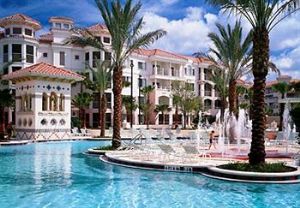
It is most common for a resort to be affiliated with just one of the bigger exchange firms, although resorts with double affiliations are not unusual. The timeshare resort one purchases identifies which of the exchange companies can be used to make exchanges. RCI and II charge an annual subscription charge, and extra fees for when they find an exchange for a requesting member, and bar members from leasing weeks for which they already have exchanged.
Owners can exchange without needing the resort to have an official association arrangement with the companies, if the resort of ownership accepts such plans in the initial agreement. Due to the guarantee of exchange, timeshares often offer despite the area of their deeded resort. What is rarely revealed is the difference in trading power depending upon the place, and season of the ownership.